
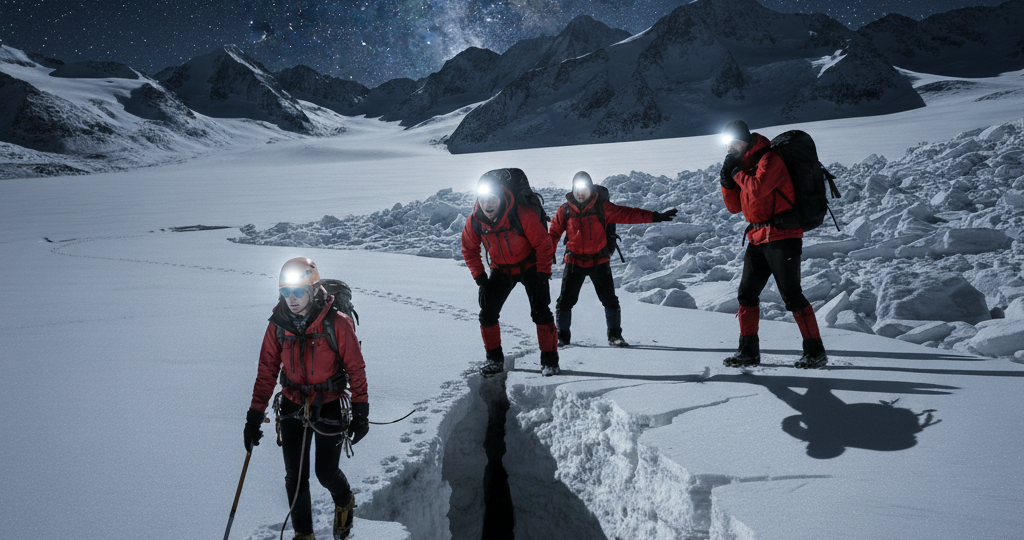
Mountaineering on snow and ice is one of the most intense and spectacular experiences you can have in the mountains. Glaciers, snowy slopes, and extreme landscapes attract travelers from all over the world, but they also require preparation, technique, and a high level of responsibility. Before venturing into the high mountains, it is essential to understand the risks, basic techniques, and the importance of having professional guides.
Progression in Snow: How to Move Safely
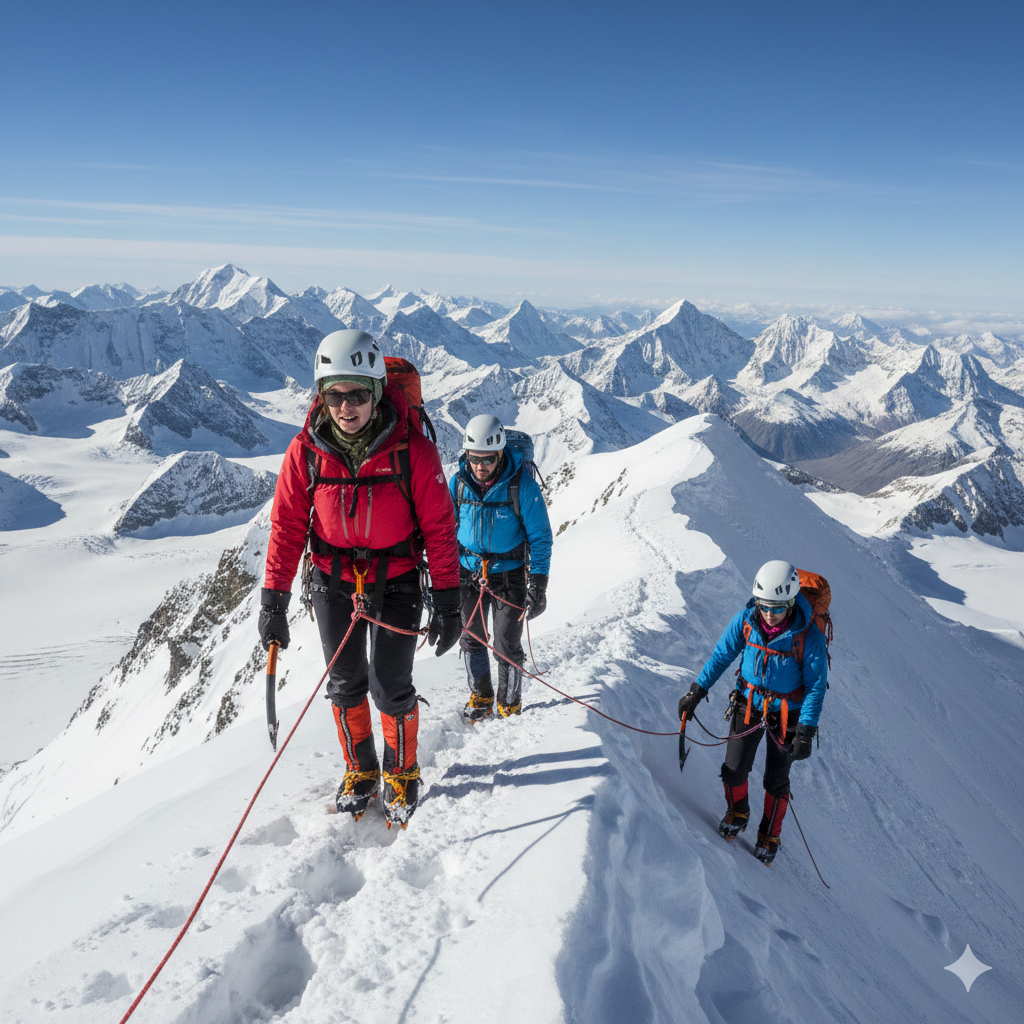
Walking on snow is not the same as walking on solid ground. Snow changes constantly depending on the temperature, wind, and slope of the terrain.
Key aspects:
► Correct use of ice axes as support and safety
tools
► Controlling effort to avoid exhaustion at
altitude
► For ascending and descending snowy slopes
► Importance of a firm footing and steady pace
Even routes considered “easy” can become dangerous without the proper technique.
Ice and Mixed Terrain Climbing
Ice climbing takes place on frozen waterfalls, couloirs, or glacial areas where rock and ice combine.
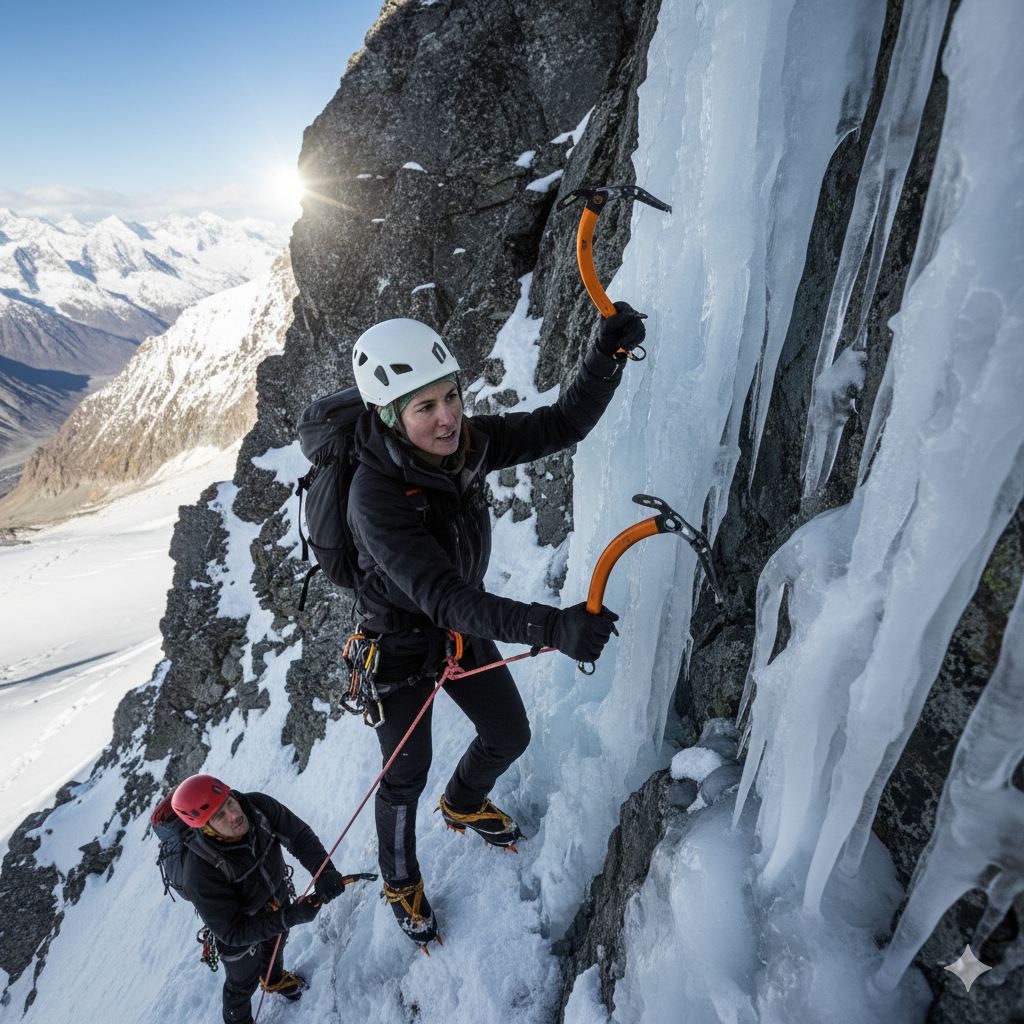
Most important:
► Constant assessment of ice quality.
► Use of crampons and technical ice axes.
► Precision in every movement to avoid
falls.
► High physical and mental exertion.
This activity is exclusively technical and should only be done with certified guides and prior experience.
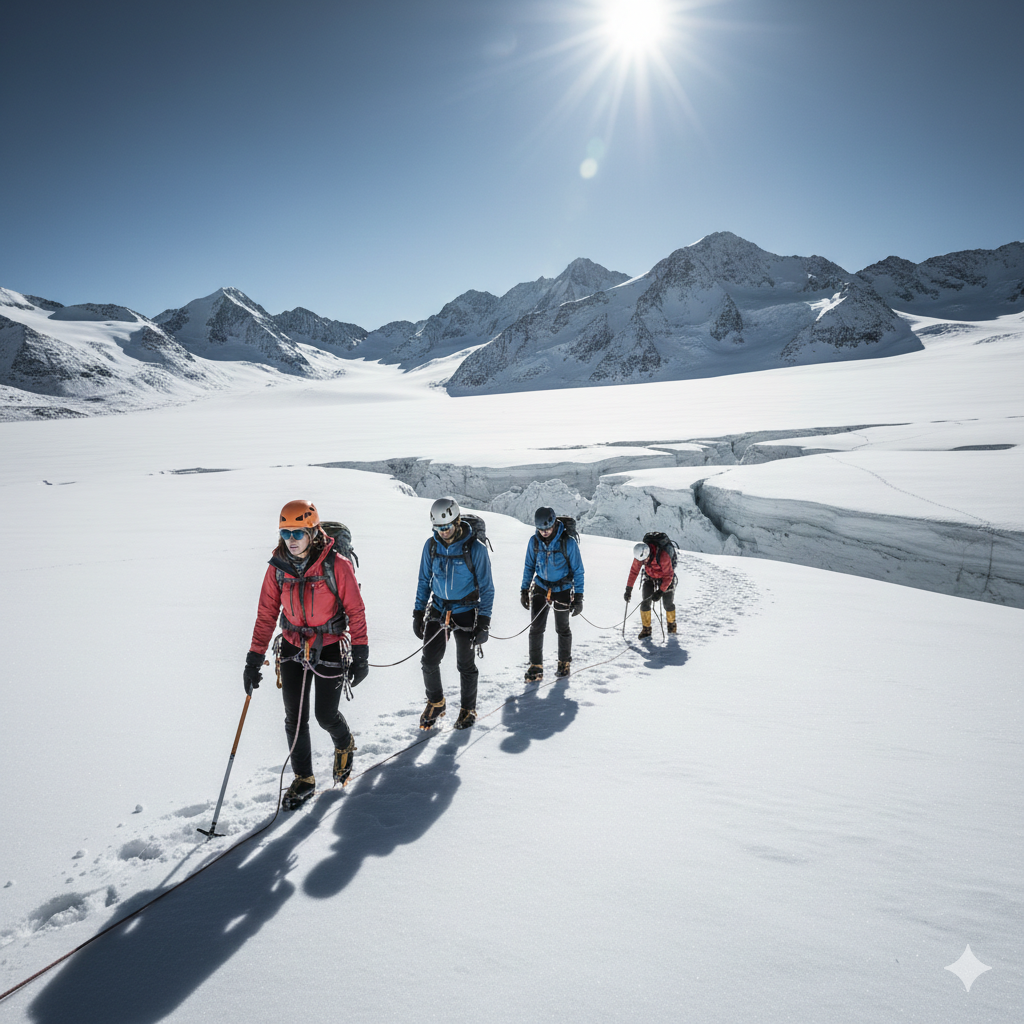
Glaciers offer some of the most breathtaking landscapes in mountaineering, but they hide invisible dangers such as crevasses covered by snow.
Key points:
► Always progress while roped together
► Basic crevasse rescue techniques
► Read the glacier terrain
► Use anchors in snow and ice.
Never cross a glacier without a professional guide, even if conditions appear stable.
Avalanches: Understanding the Greatest Danger in the Mountains
Avalanches are one of the most serious risks in high mountains and can occur even on sunny days.
Influencing factors: slope of the terrain, amount of recent snowfall, temperature and wind, type of accumulated snow.
High mountains demand more than physical strength; they demand good judgment.
► Knowing when to turn back from the
summit when conditions are unsafe.
► Constant assessment of the weather.
► Managing fatigue, hydration, and
acclimatization.
► Responsible leadership in a group.
In the mountains, returning safely is always the true success.
Cox, J., & Fulsås, K. (2004). Montañismo: La libertad de las cimas (7.ª ed.). Desnivel.
Wow that was strange. I just wrote an really long comment but after I clicked submit my comment didn’t appear.
Grrrr… well I’m not writing all that over again. Anyway, just
wanted to say excellent blog!