
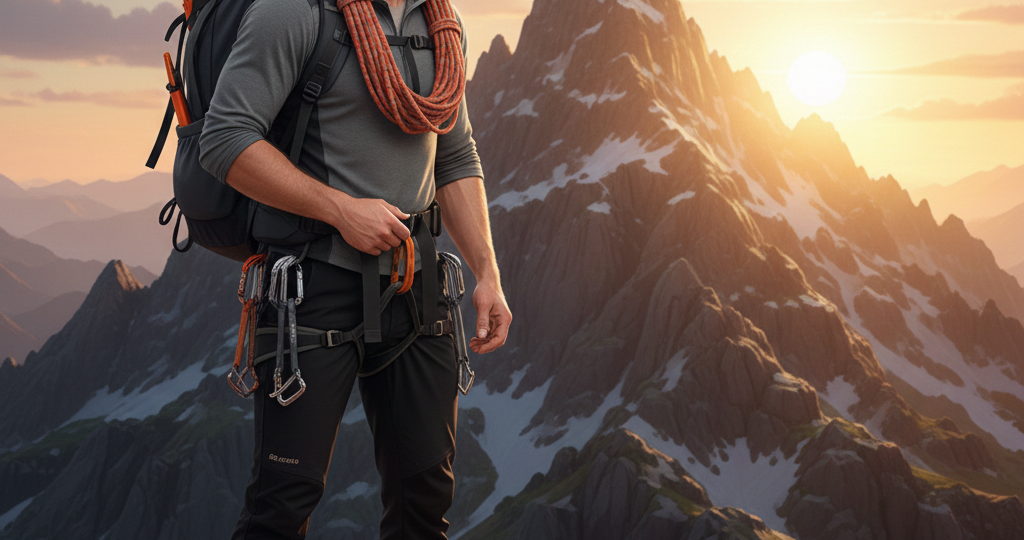
Rock climbing is one of the most exciting disciplines in mountaineering, but it is also one of the most demanding in terms of preparation and judgment. It is not just a matter of climbing a wall, but of moving efficiently, protecting yourself properly, and making responsible decisions in a vertical environment.
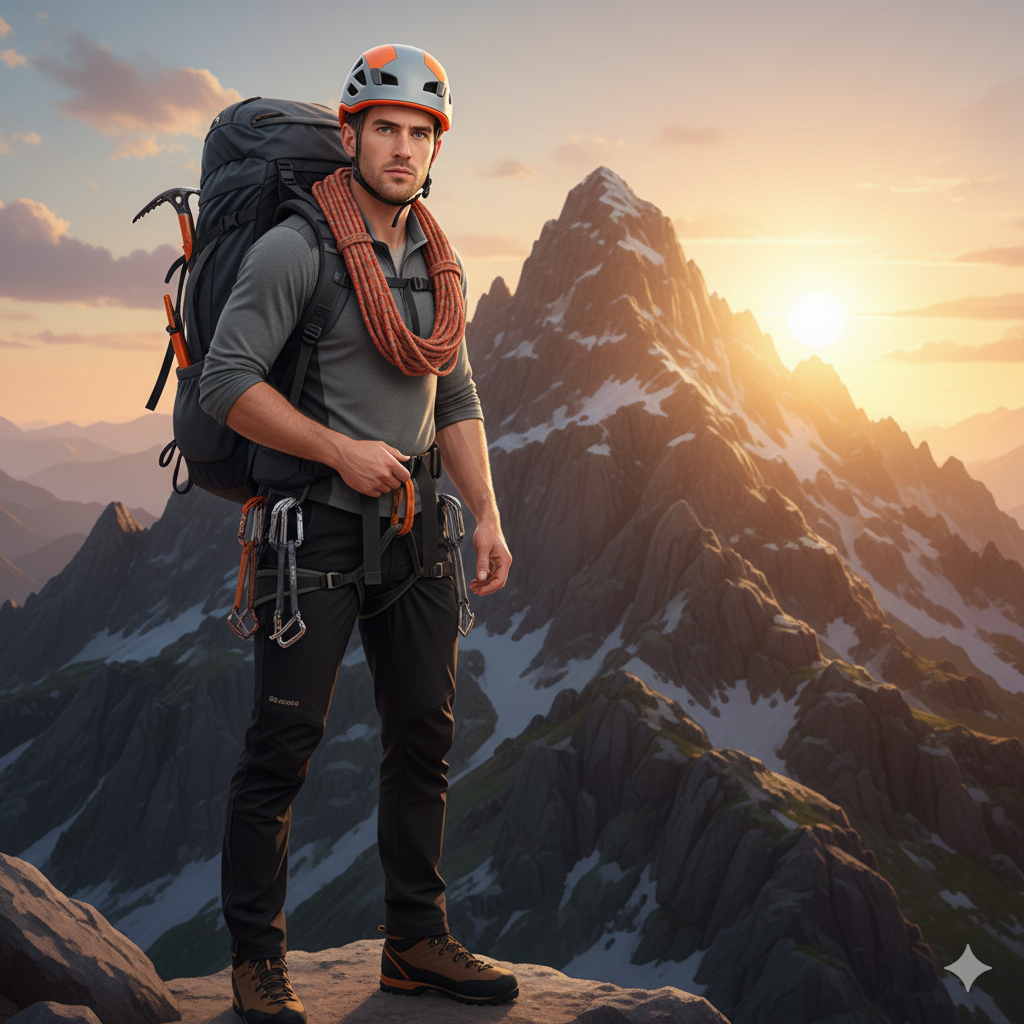
In this section, we explain the fundamental principles of rock climbing, based on techniques used by professional mountaineers and guides, so that you understand what this activity really involves before you try it.
Rock Climbing Technique: Much More Than Strength
One of the most common mistakes among beginners is to think that climbing depends solely on arm strength. In reality, good technique is based on:
- Smooth,controlled movements
- Body balance
- Precise use of the feet
The body should be kept close to the rock, using the legs as the main engine. The feet are placed precisely on small footholds, while the hands help maintain balance and stability.
In addition, proper breathing and a steady pace allow you to conserve energy, which is key on long or demanding routes. Before starting a route, climbers analyze the route, identifying difficult steps and resting places, which is known as route reading.
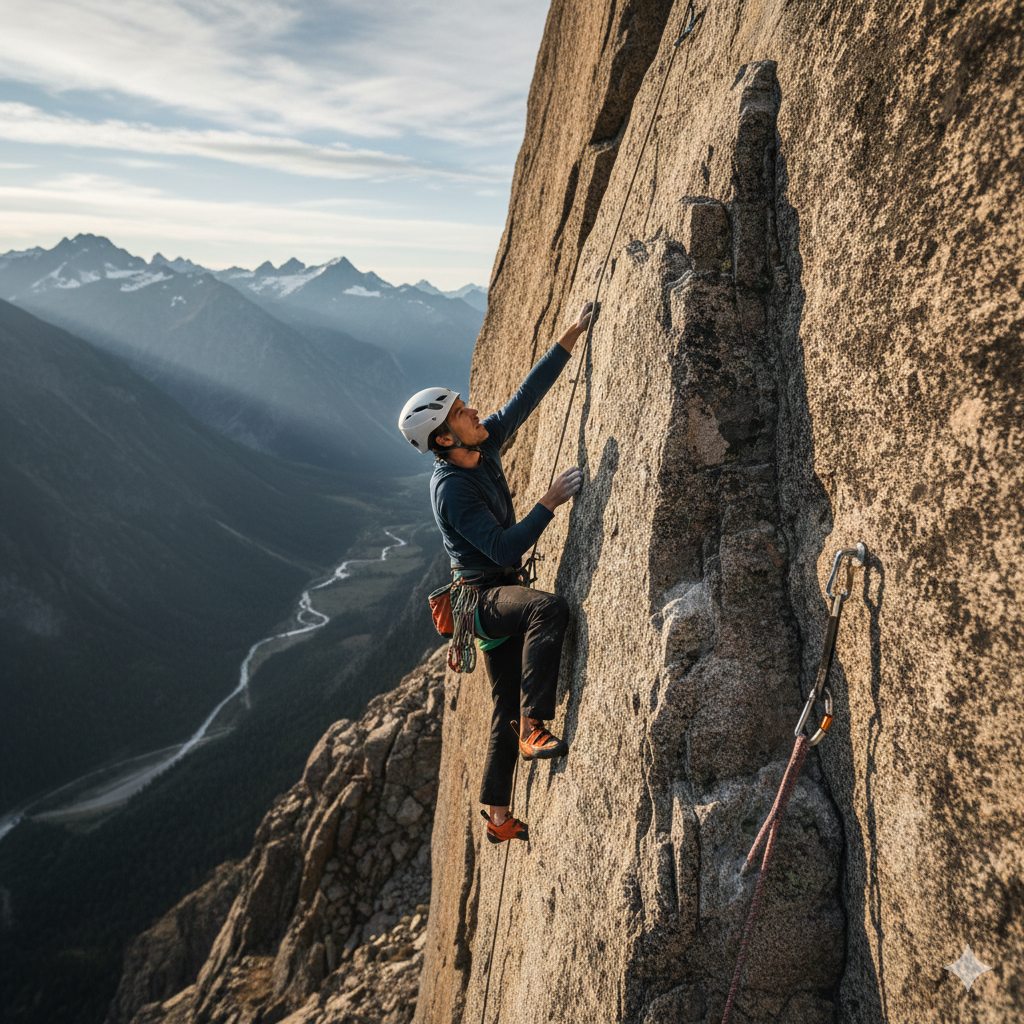
Rock Protection: The Basis of Safety
Safety in climbing depends largely on the correct use of protection. This prevents long falls and reduces the risk of injury.
There are two main types:
1. Fixed protection
These are anchors installed in the rock, such as bolts or parabolts, and are mainly used on sport routes.
2. Mobile protection
These include nuts and friends, which are placed and removed during climbing. Their advantage is that they do not damage the rock if used correctly, respecting the natural environment.
Belays (points where the climber secures them selves)
Must always be solid, balanced, and redundant, using more than one anchor point. A common mistake is to rely on a single anchor, something that professional guides strictly avoid.
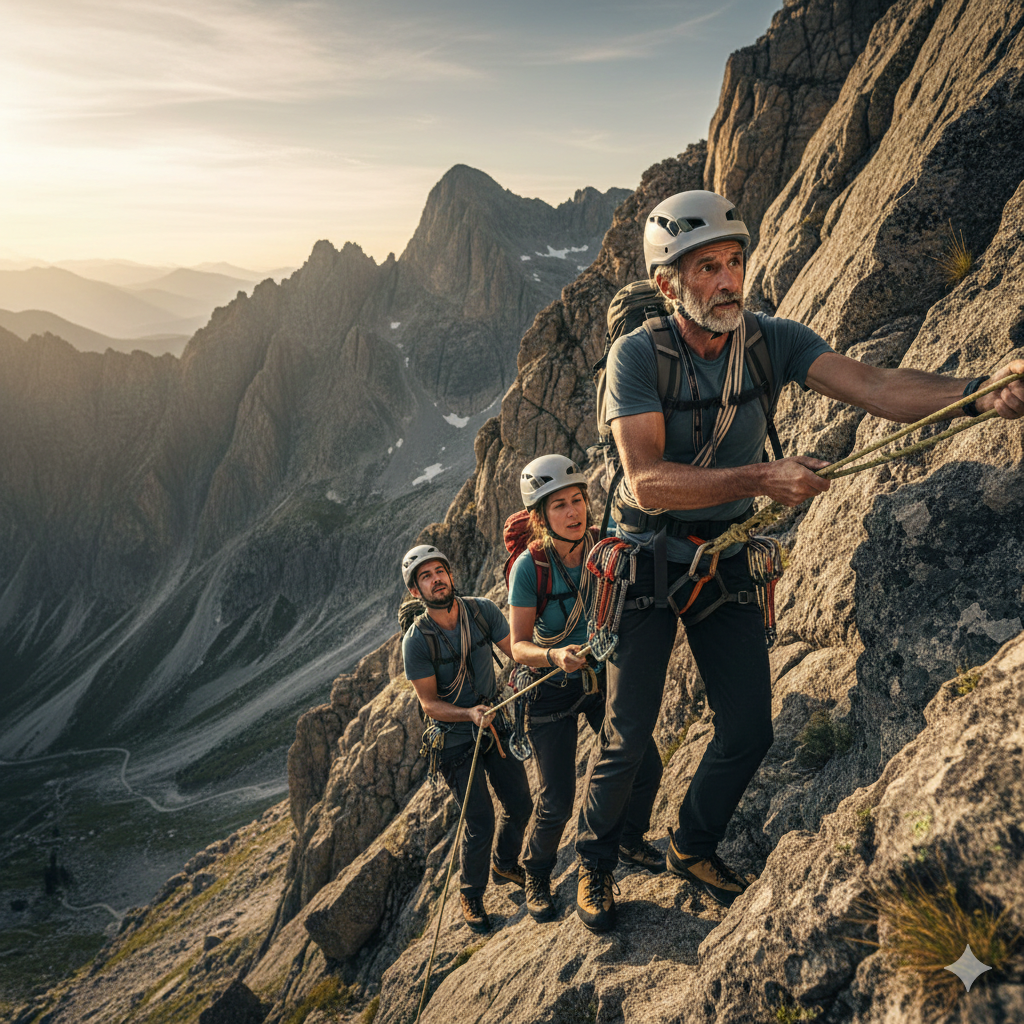
Lead Climbing: Leading the Way Up
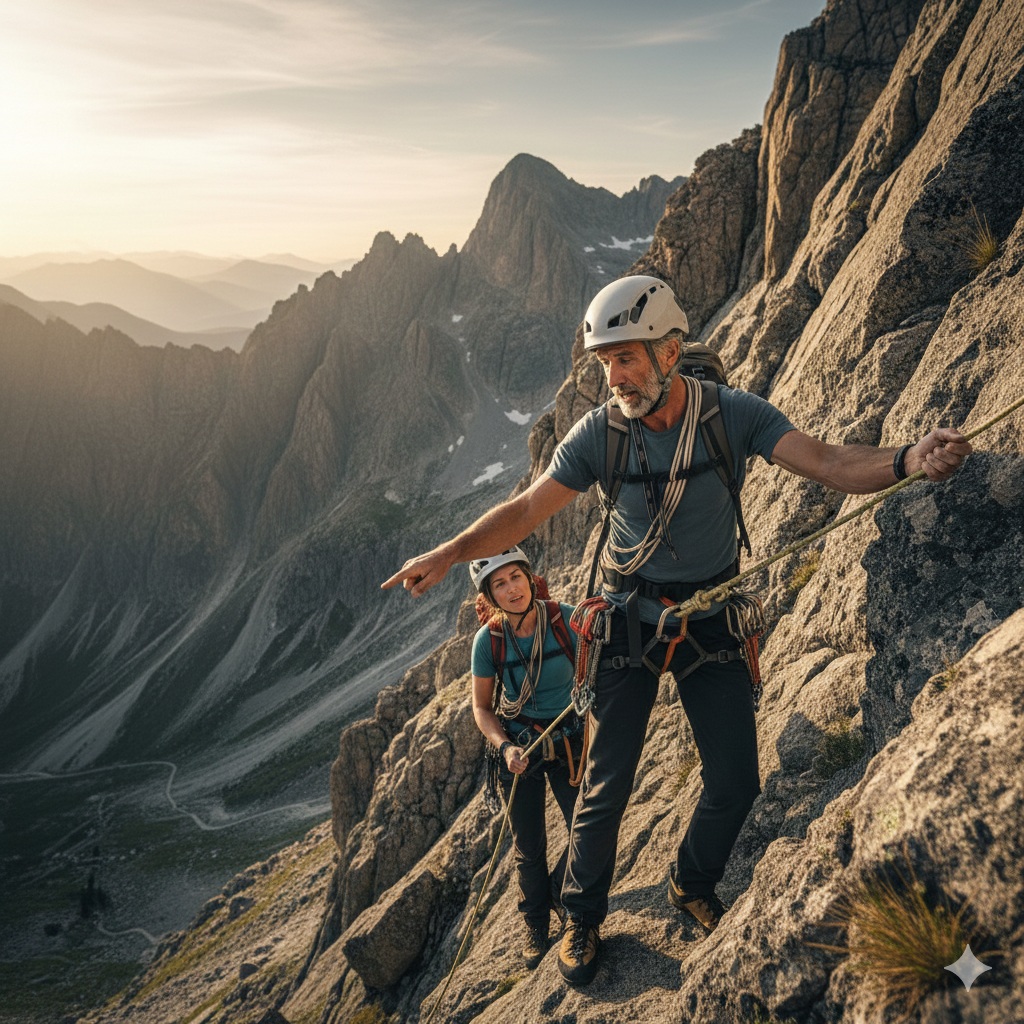
Lead climbing means being the one who advances while placing protection. It is the role with the greatest responsibility, as the safety of the team depends on your decisions.
The lead climber must:
Remain calm under pressure
Clear communication with the belayer is also essential, using standard commands to avoid confusion, especially in windy or noisy environments.
Assess the quality of the rock
Place protection at the right time
Artificial Climbing:
When the Rock Sets the Limit
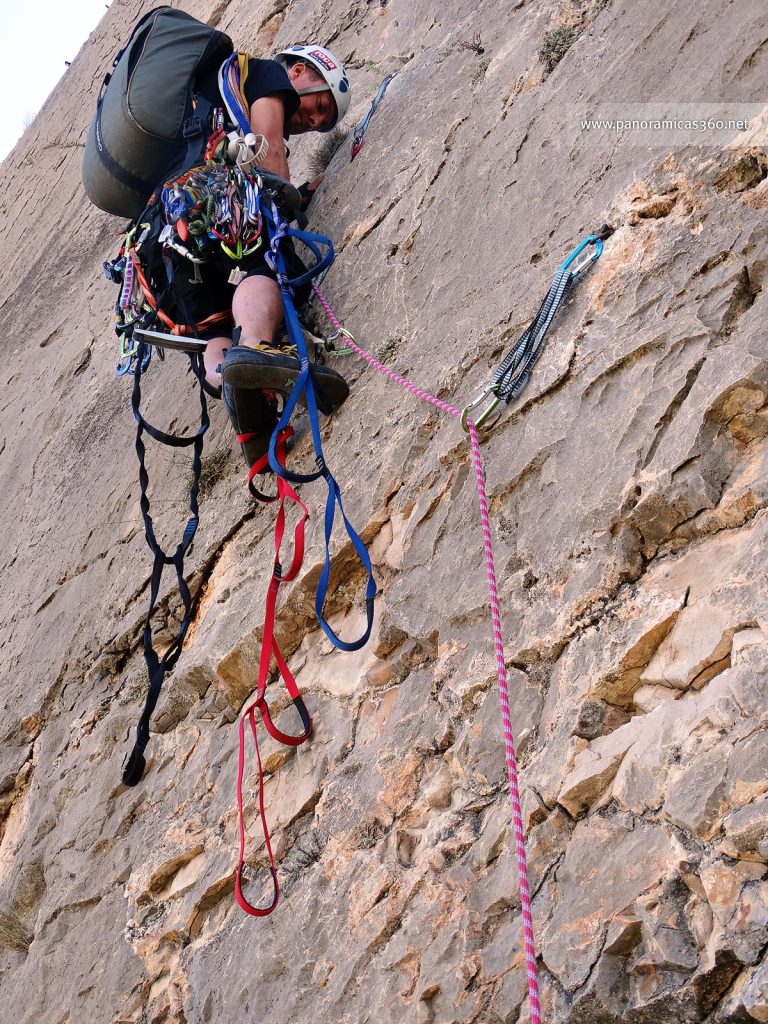
On some walls, the rock does not allow for free climbing. In these cases, artificial climbing is used, where progress is made by relying directly on equipment this technique requires.
Great mental control:
Although it is a valid tool in technical mountaineering, it also has a greater impact on the rock, so it is used only when strictly necessary and under clear ethical criteria.
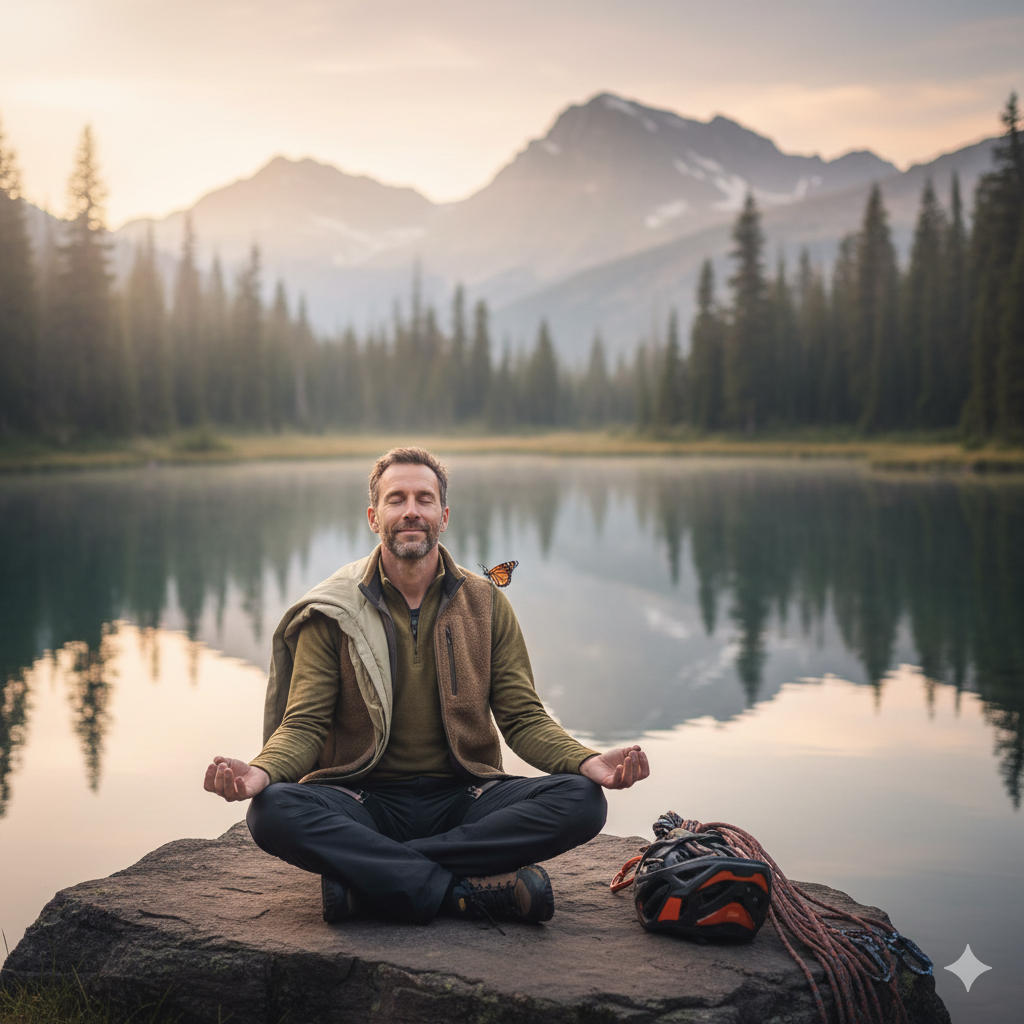
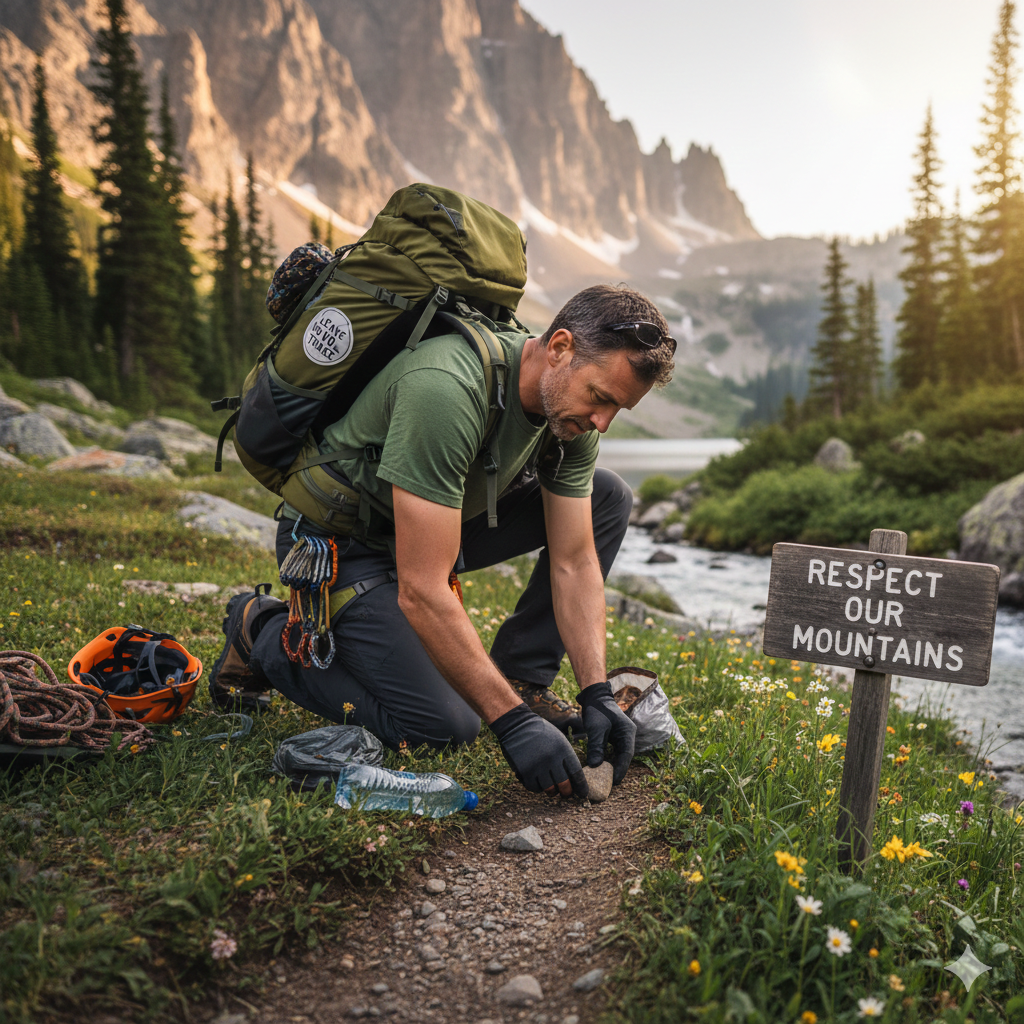
Modern climbing promotes a responsible approach:
Safety before personal achievement
The mountain is not an amusement park; it is a natural space that demands preparation, respect, and humility.
Minimal use of fixed anchors
Respect for the rock and the environment
“Climbing isn’t just about scaling a wall; it’s about moving with technique, protecting with judgment, leading with responsibility, and respecting the mountain at every step.”
Cox, J., & Fulsås, K. (2004). Montañismo: La libertad de las cimas (7.ª ed.). Desnivel.

Your style is very unique in comparison to other people I have read stuff from.
Thanks for posting when you have the opportunity, Guess I’ll just book mark
this web site.