
Mountains are impressive not only for their size and beauty, but also for the natural processes that constantly create and transform them. Understanding how they work helps tourists comprehend their surroundings, travel more safely, and appreciate the mountain experience.
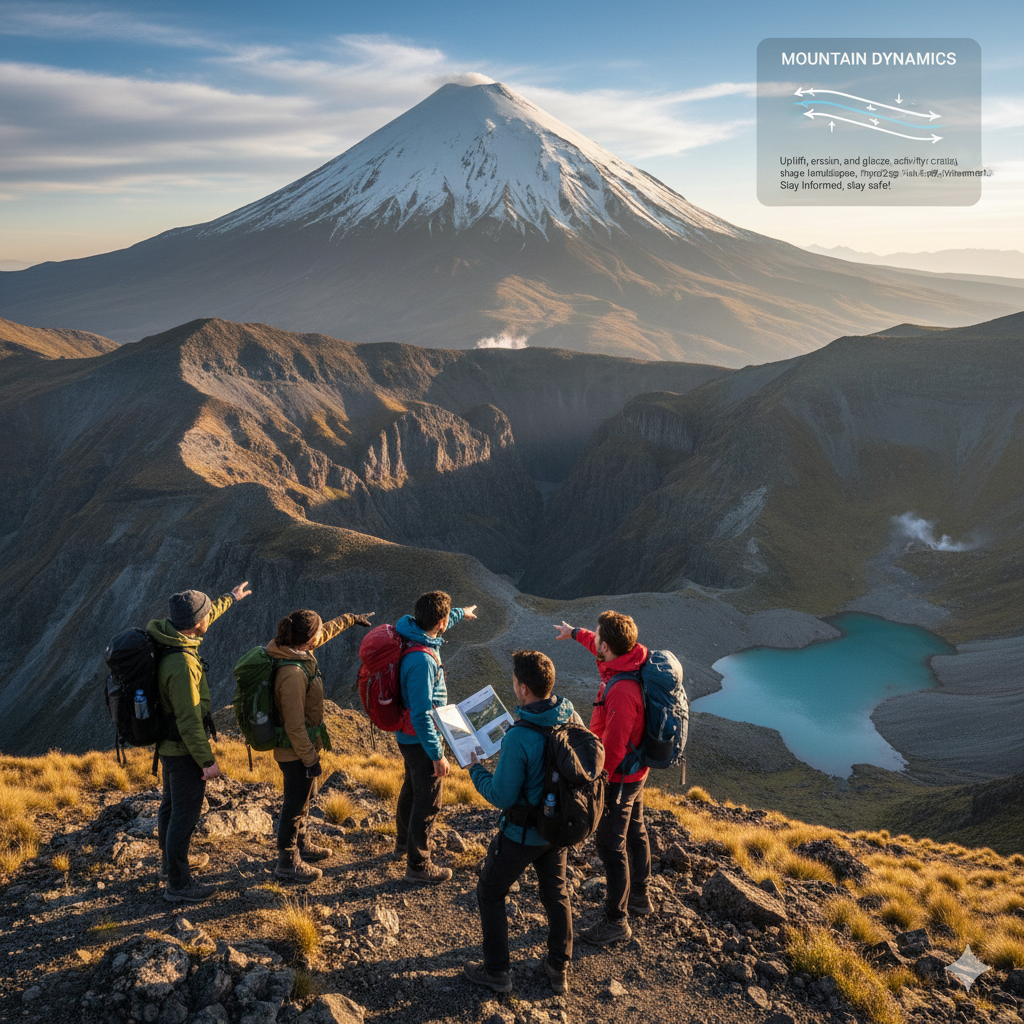
Mountains are formed by powerful internal forces within the Earth. The book explains three main processes:
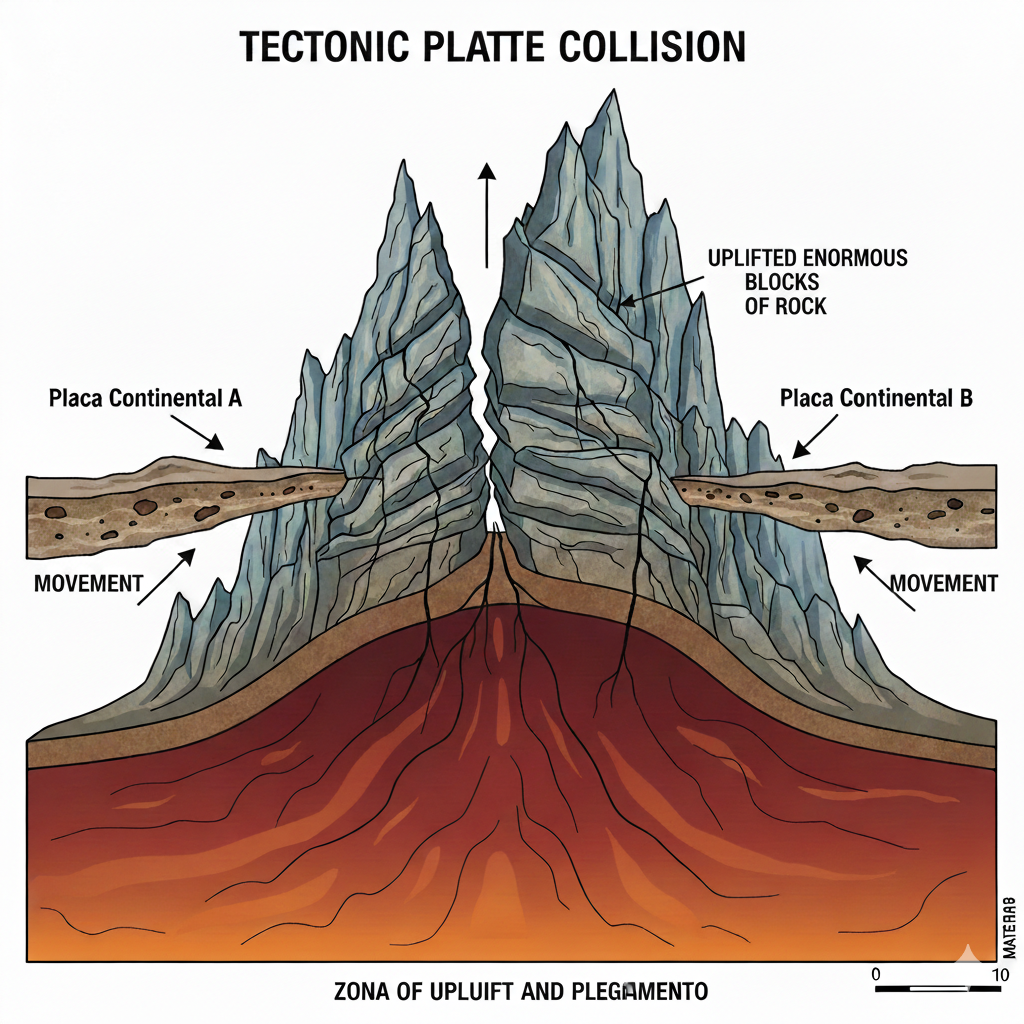
Collision of tectonic plates, which lifts enormous blocks of rock
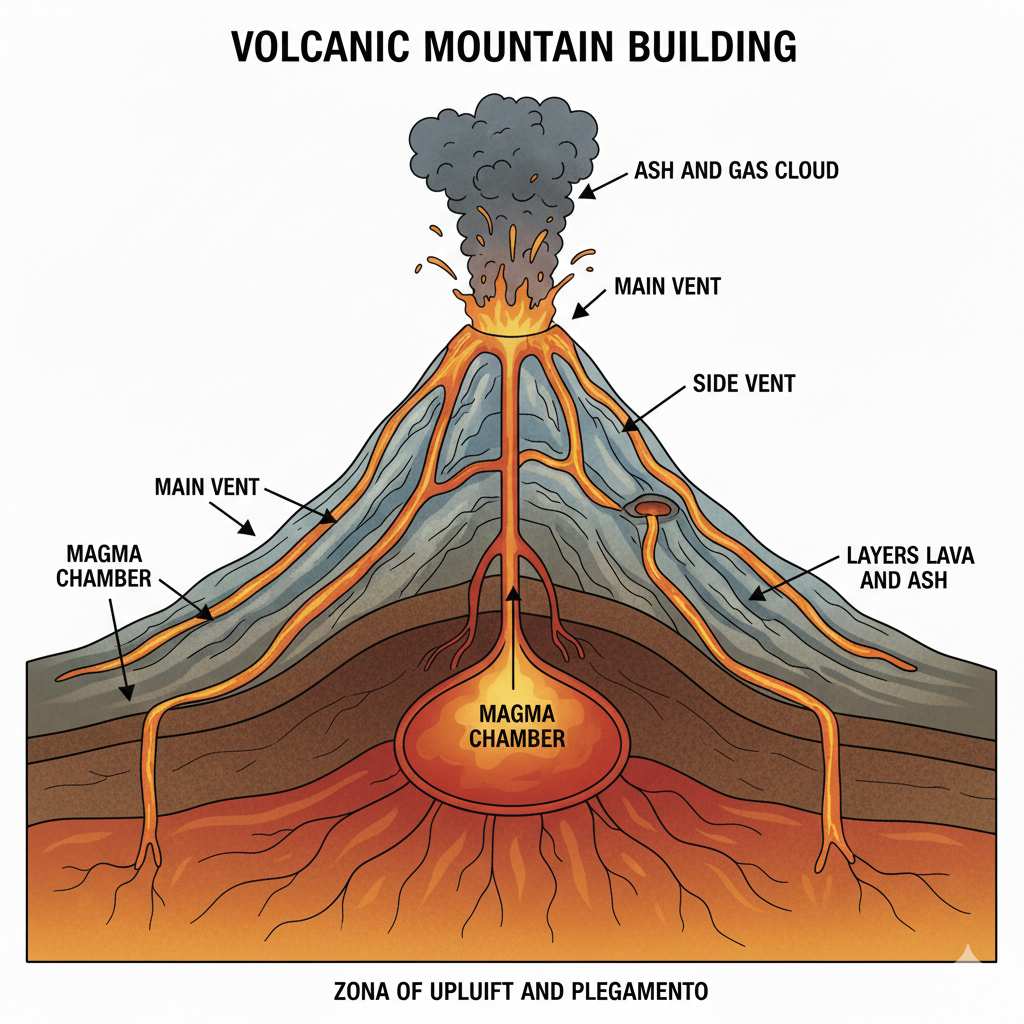
Volcanic activity, which builds mountains from lava and ash
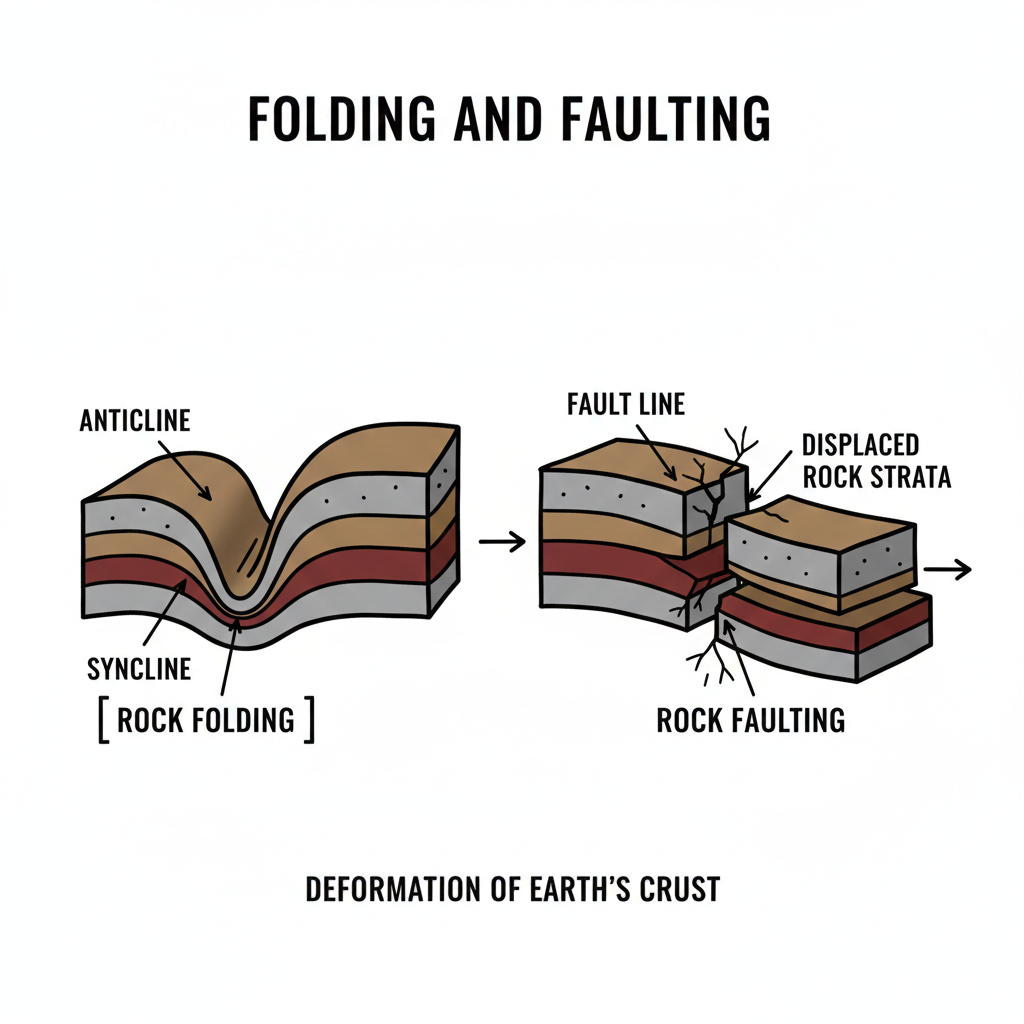
Folding and faulting, which deform the Earth’s crust
Materials that make up mountains
Mountains are composed of different types of rock, each with its own characteristics
- Igneous (volcanic) rocks: hard and resistant
- Sedimentary rocks: formed by layers
- Metamorphic rocks: transformed by pressure and heat
These materials directly influence
- The difficulty of a route
- The stability of the terrain
- The type of climbing or trekking
That is why some mountains are ideal for hiking and others require technical equipment and a specialized guide.
The snow cycle in the mountains
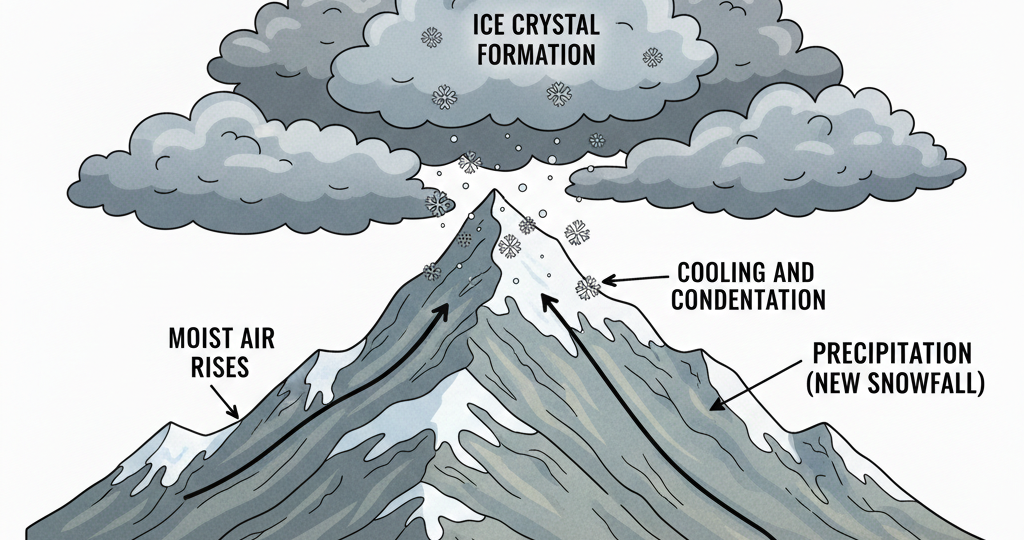
| 1. Precipitation (new snow) | 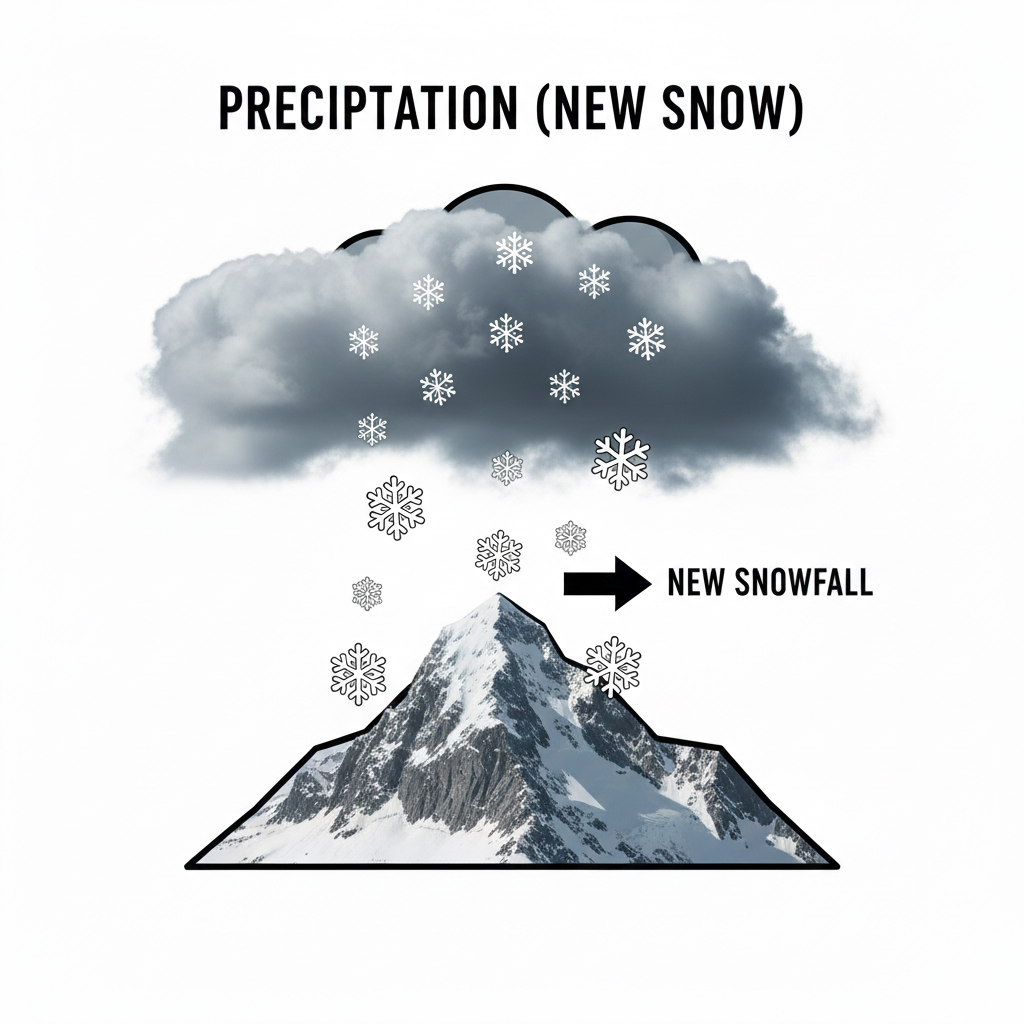 |
| 2. Compaction | 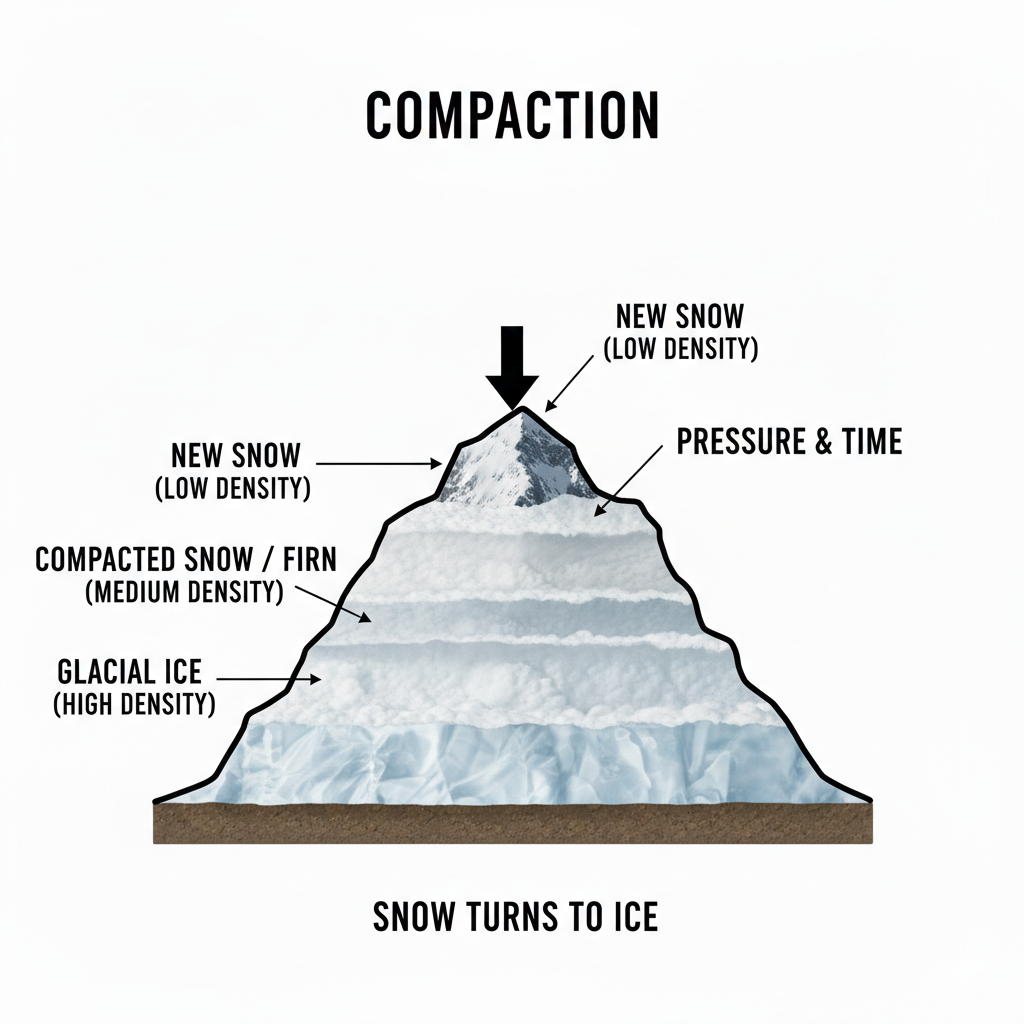 |
| 3. Transformation into ice | 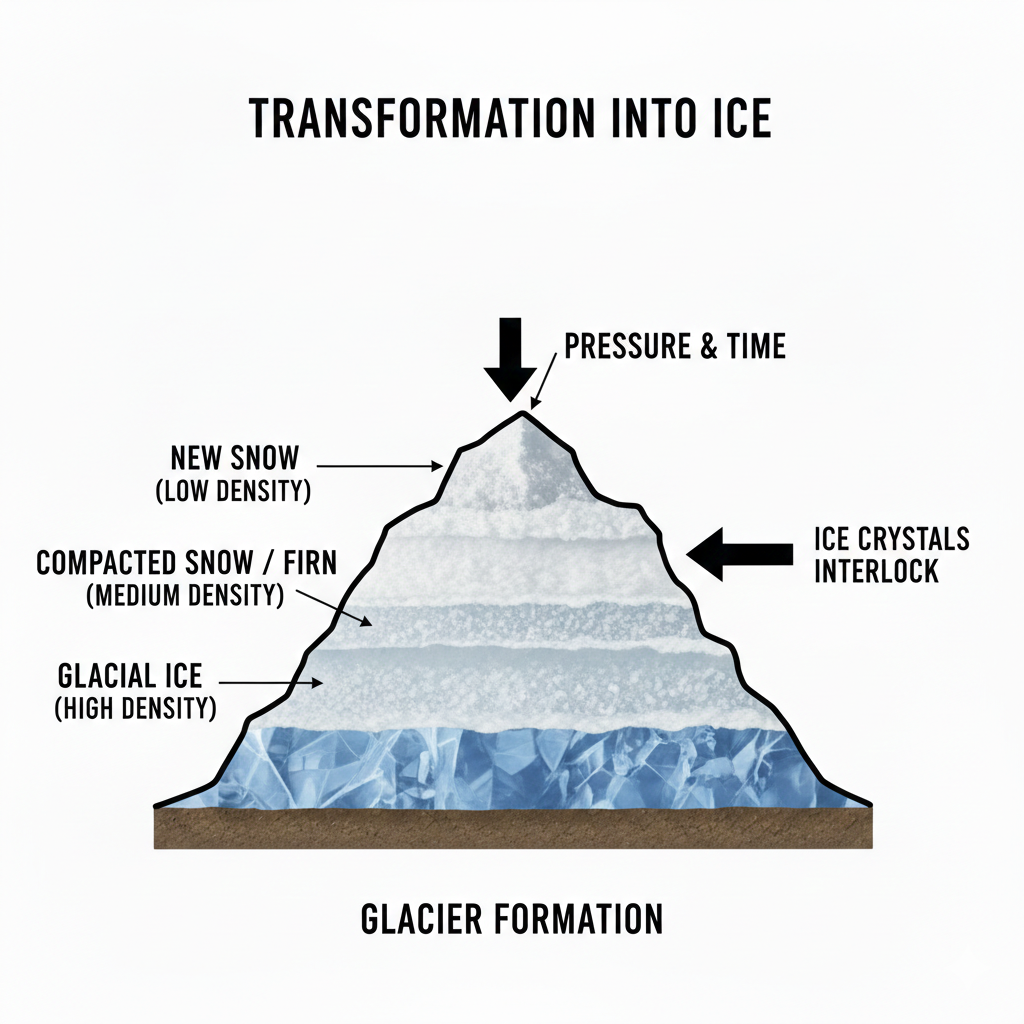 |
| 4. Melting or displacement | 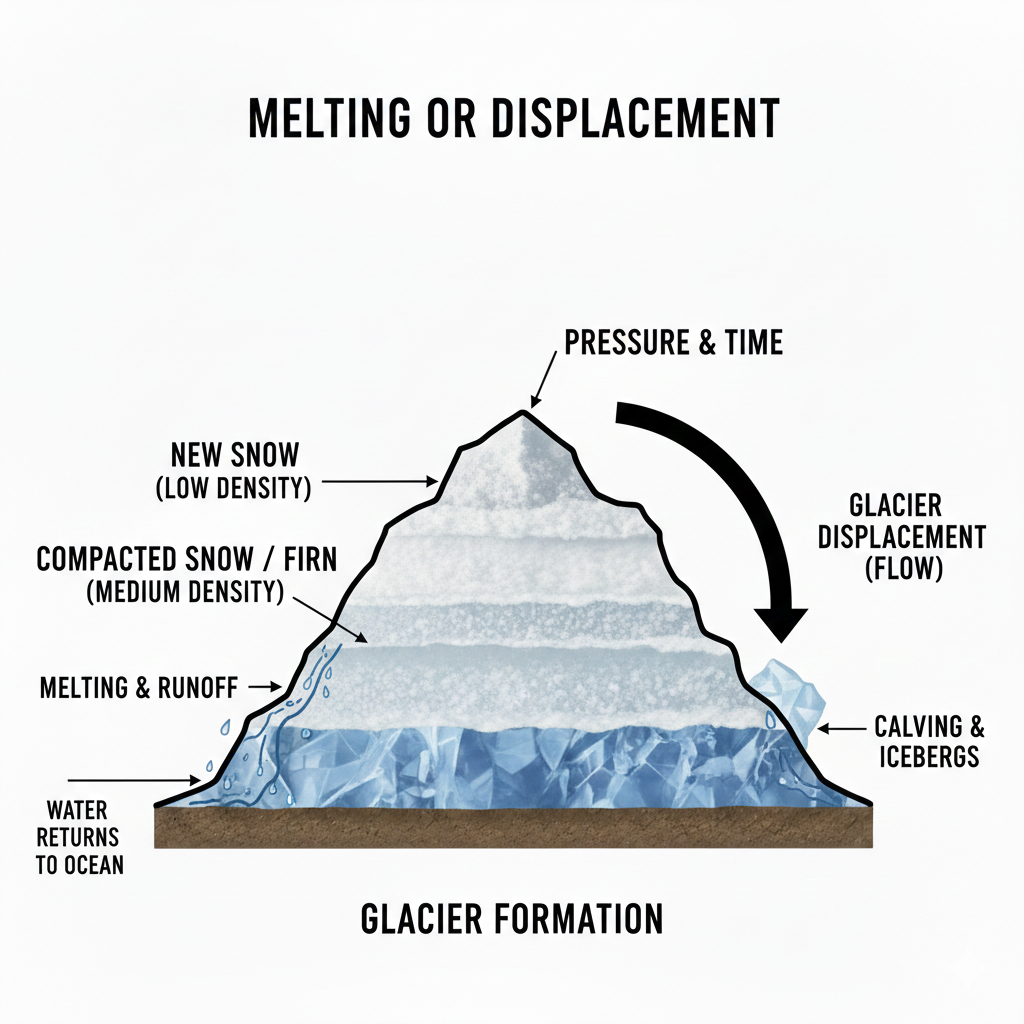 |
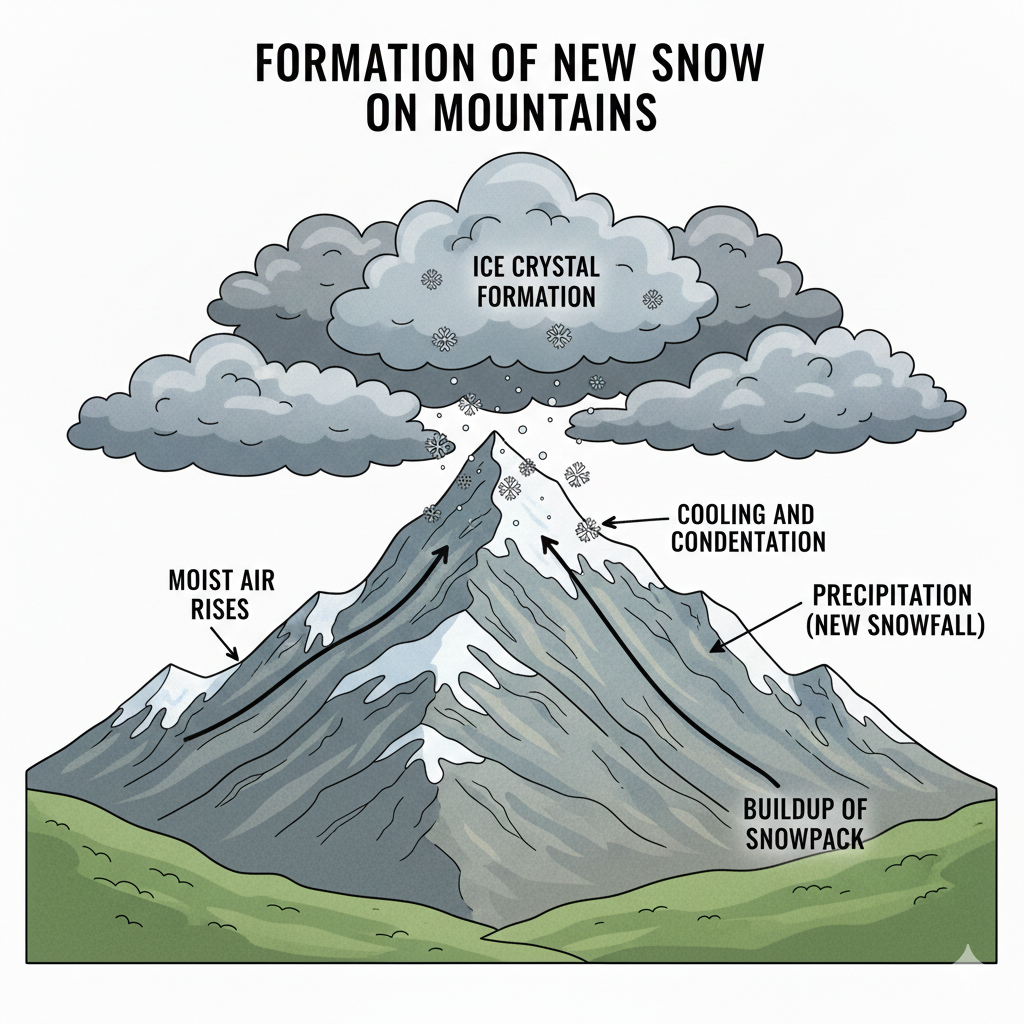
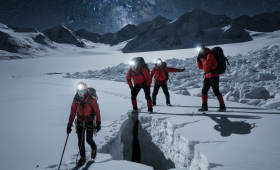
Cracks form when ice moves and fractures. Many are covered by snow and are not visible.
🔹 Main risk for inexperienced tourists.
🔹 Key reason to always go with a mountain guide.
🔹 Mandatory use of ropes and technical equipment on glaciers.
Understanding this phenomenon helps travelers understand why high mountains should not be climbed without professional guidance.
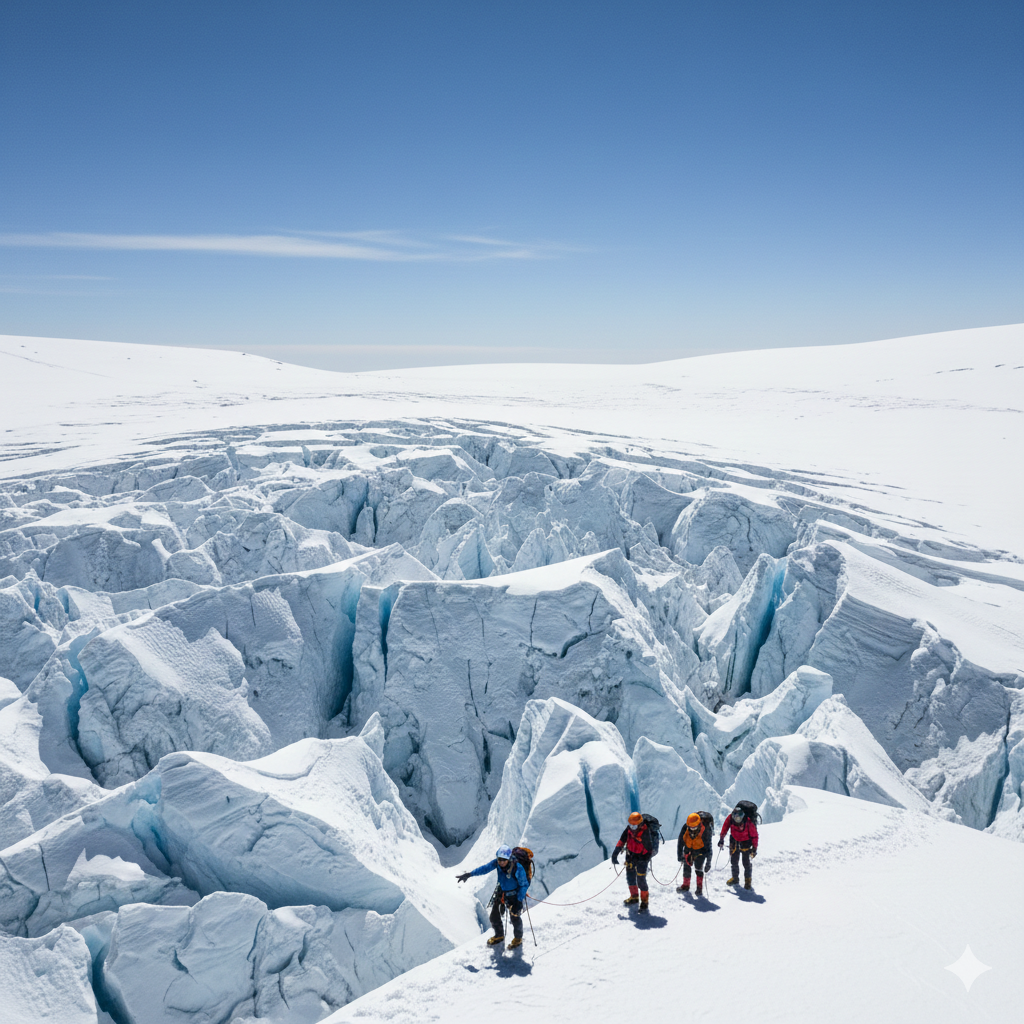
Mountain weather: extreme and changeable climate
In the mountains, the weather can change in minutes.
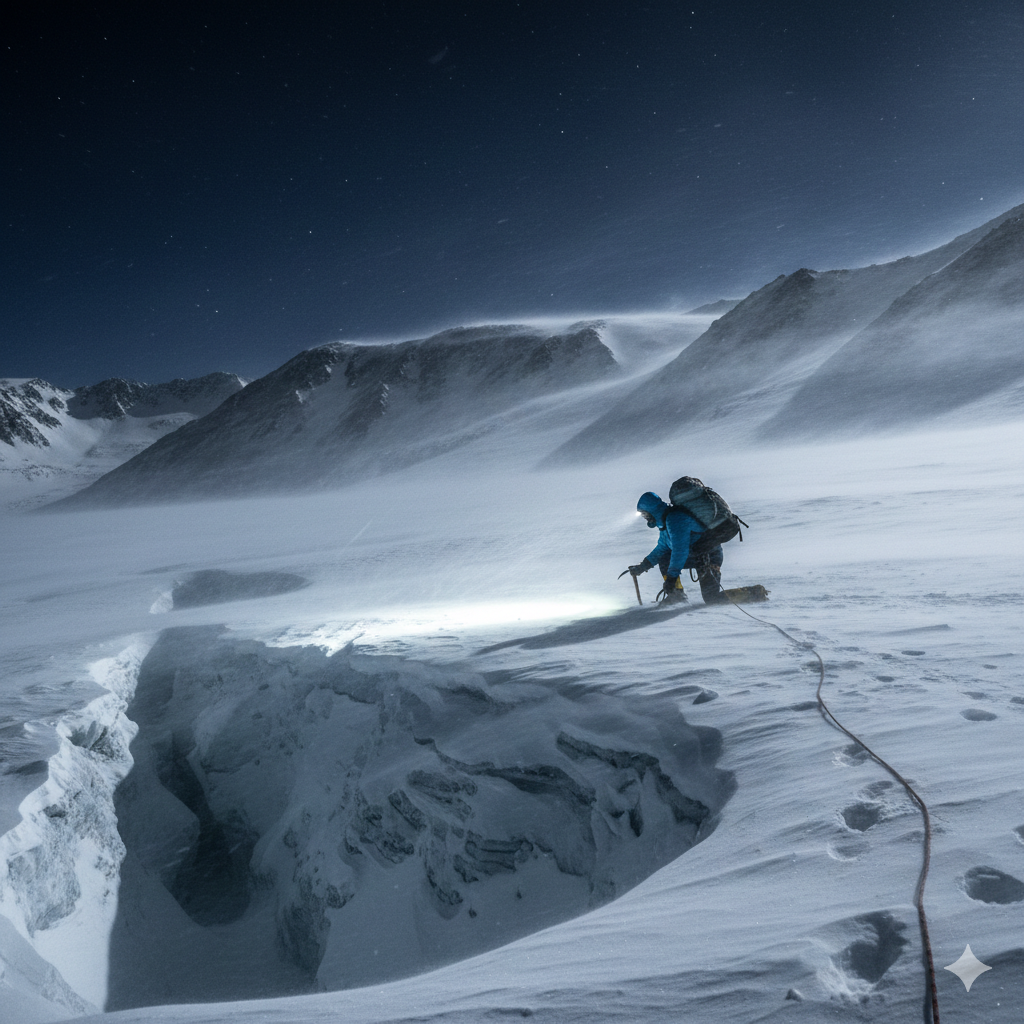
Sudden strong winds
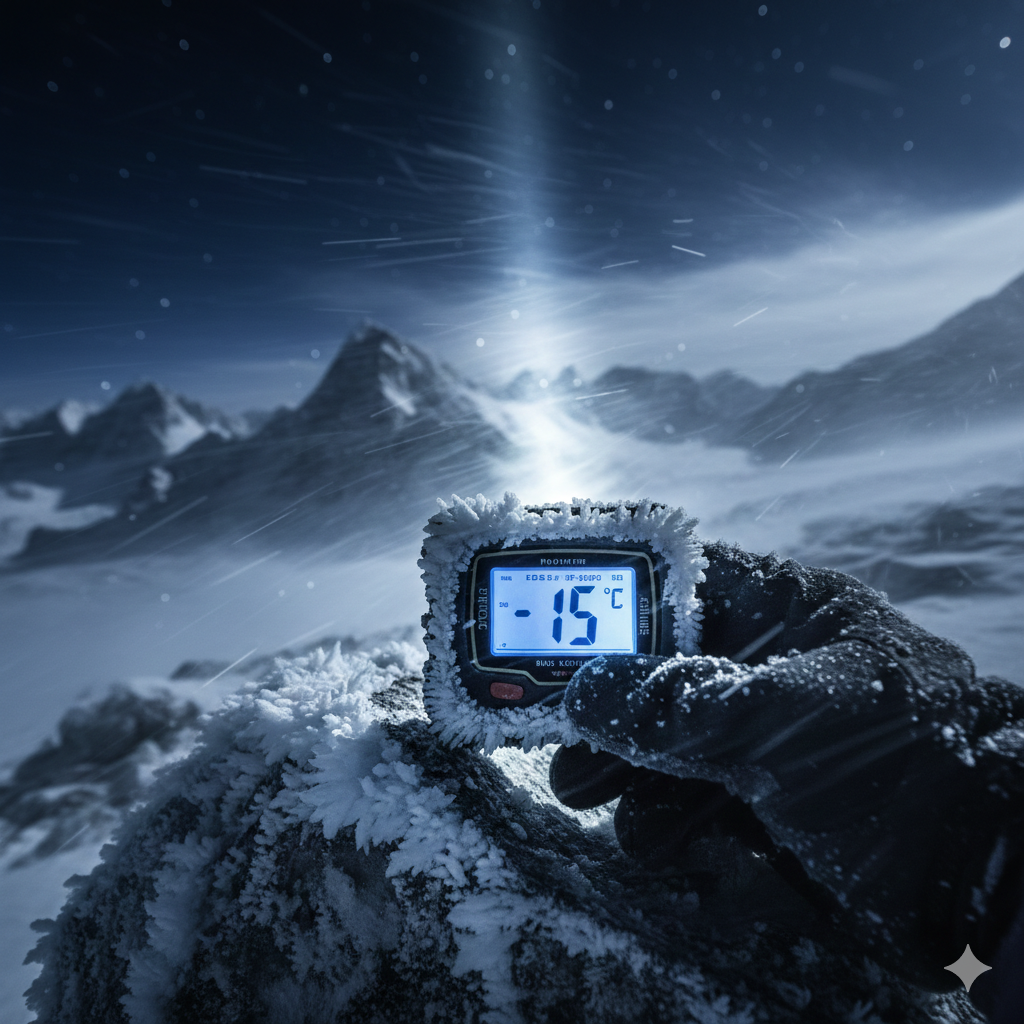
Sharp drops in temperature
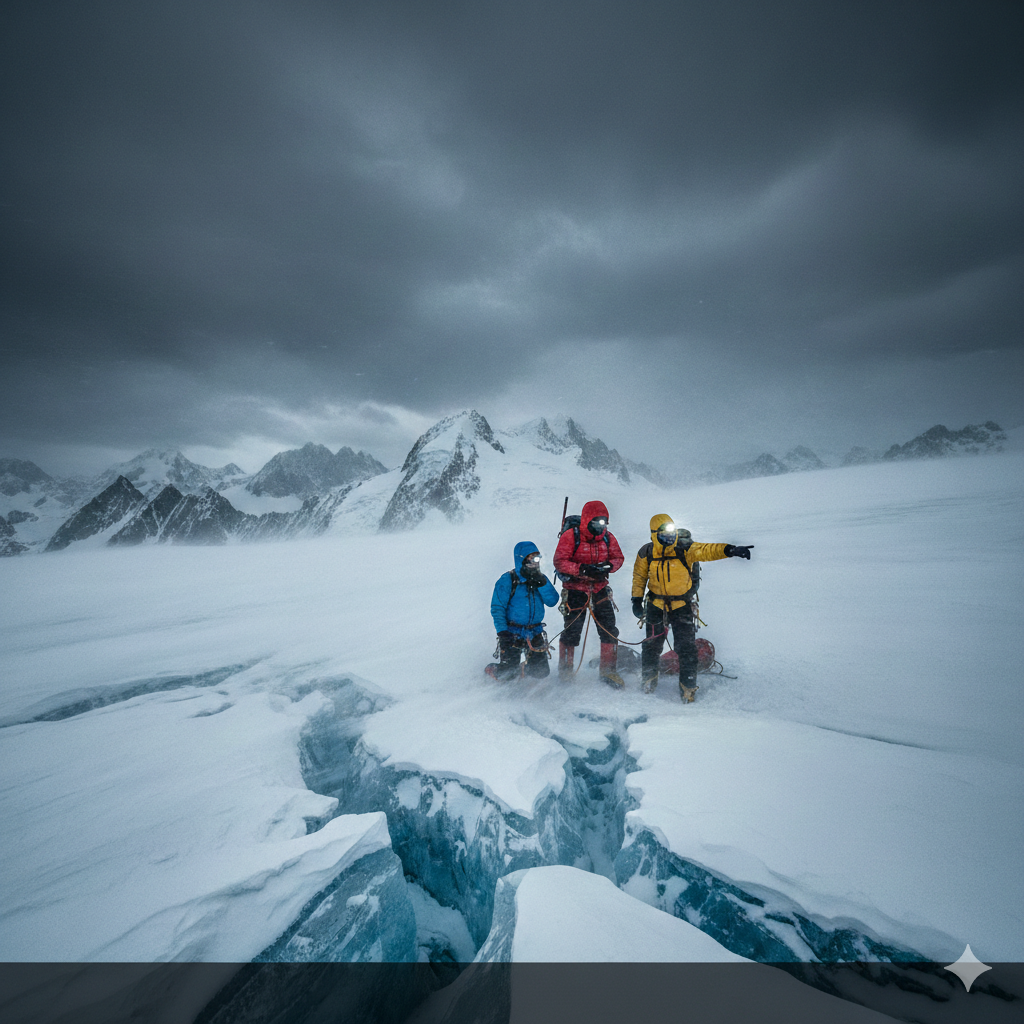
Unexpected storms
Therefore, a sunny day at the start does not guarantee good weather at the summit. Weather is one of the most important factors in planning a mountain trip.
Cox, J., & Fulsås, K. (2004). Montañismo: La libertad de las cimas (7.ª ed.). Desnivel.
I got this web page from my pal who shared with me regarding this website and now
this time I am visiting this site and reading very informative
content at this time.
Thank you for some other informative site. The place else may I am getting that type of info written in such an ideal way? I’ve a project that I am just now operating on, and I’ve been at the look out for such information.